
Rhino behaviour and social dynamics - The impacts of long-term horn trimming
Between 2017 and 2023, across the Greater Kruger — a landscape that held more than a quarter of all Africa’s rhinos — roughly USD 74 million was spent on rangers, dogs, cameras and control rooms, yet researchers found no statistical evidence that this reactive spending significantly reduced poaching.
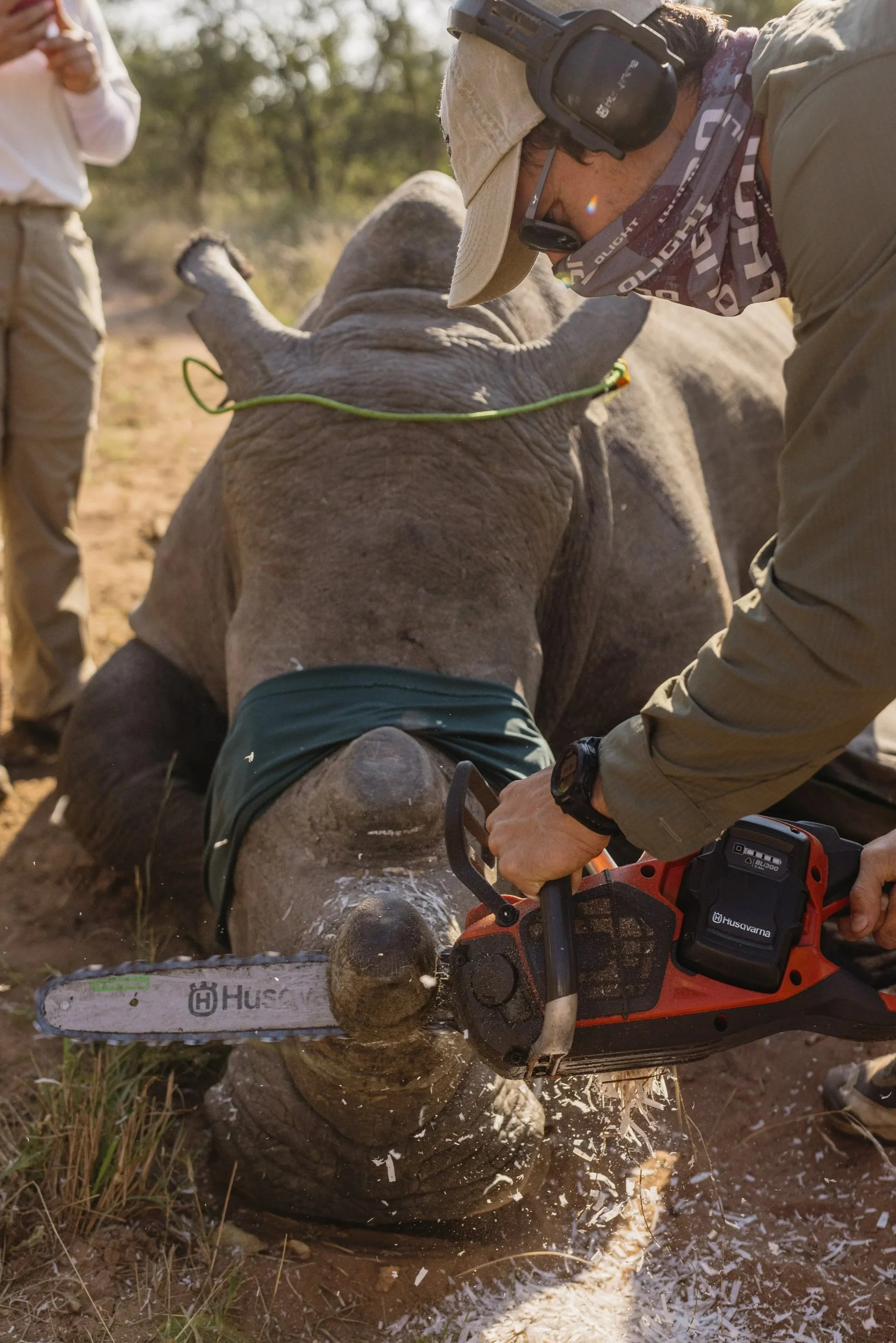
One intervention did work, dramatically. A peer-reviewed study conducted across eight reserves found that there was a 78% reduction in poaching after rhinos had their horns trimmed — an intervention that was achieved using just 1.2% of the total anti-poaching budget (Kuiper et al., Science, 2025). The study found that there was a 95% reduction in the annual poaching risk to a particular rhino following a horn trimming intervention (a drop from 13% to 0.6%).
Horn Trimming is one of our most powerful and cost effective tools in the fight against rhino poaching. However, a rhino’s horn is an iconic part of its anatomy and it is critical to ensure that actions taken to protect rhinos are not having detrimental consequences to the behaviour and social dynamics of the very animals we are working to save.
What are we studying?
The study is a long-term analysis of the rhino populations (both Black and White) that we monitor and protect. Using data from: advanced tracking collars; remote surveillance footage; trail cameras; thermal imaging and; direct observations, we are monitoring:
spatial and resource utilisation patterns
territorial behaviour
protection / self-defence capabilities
reproductive success
inter-calving intervals
mother, calf interactions
methods of social communication
influence of differing horn lengths on behaviour and social dynamics
impact of repeated procedures on individuals over an extended period of time
In particular we are looking at whether any of the above categories show different and/or concerning results when horn-trimming is used as a long-term management tool.
Our Methods
As far as possible we prioritise data collection methods that minimise direct contact and influence on the animals that we are studying.
Using thermal drone technology combined with remote surveillance and trail cameras positioned at strategic points in the reserve we are able to collect data on social interactions that are typically associated with high stress events for the rhinos without influencing behaviour or posing a risk to either rhino or ranger.

Middens!
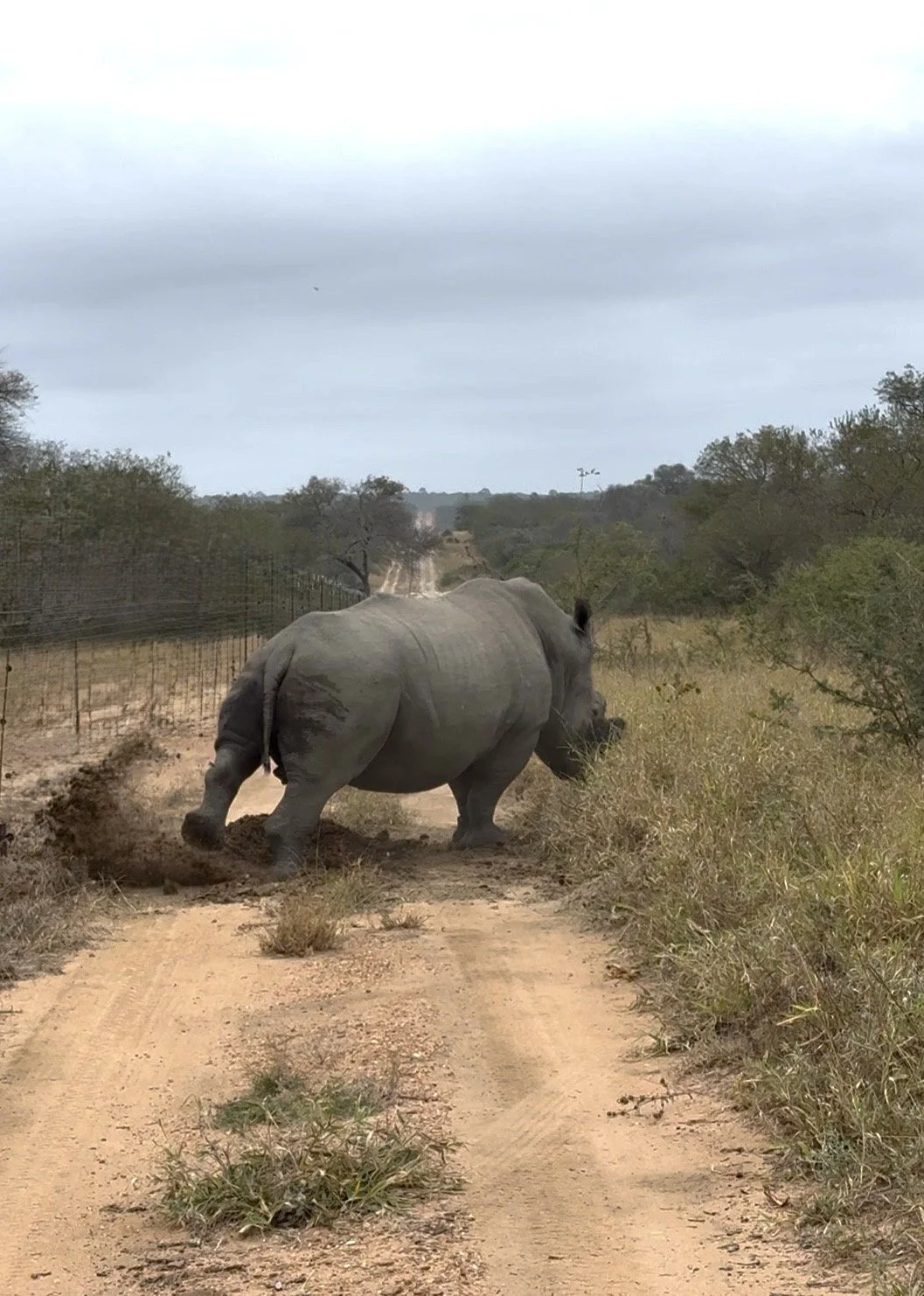
Rhino middens are unique features in an ecosystem. As mega-herbivores and hindgut fermenters both black and white rhinos create huge nutrient deposits and habitats that persist for years sheltered from the environment around them.
Middens have long been regarded to be key communication hubs in rhino society. If there are significant behavioural changes, and impacts to the social dynamics of a rhino population subject to long-term horn-trimming it is highly likely to present observable evidence at the midden sites.
Remote observation of these sites forms a core element to understanding the nuances in social dynamics that take place even without individuals being in the same place at the same time.
Get involved
If you would like to be directly involved in our ongoing research why not join us for a Rhino Monitoring Experience?